You bought the spray from Home Depot. You hit every ant you could see. You wiped down the counters, sealed the cereal, moved the fruit bowl off the counter.
A week later, they're back.
This is one of the most common calls we get from homeowners in Meridian, and the frustration behind it is real. You did something. You put in the effort. And it didn't work.
Here's the thing: it's not because you did it wrong. It's because the spray itself is the wrong tool for the job. Understanding why takes about five minutes, and once you get it, the ant problem starts to make a lot more sense.
The Spray Only Kills What You Can See
This is the core problem.
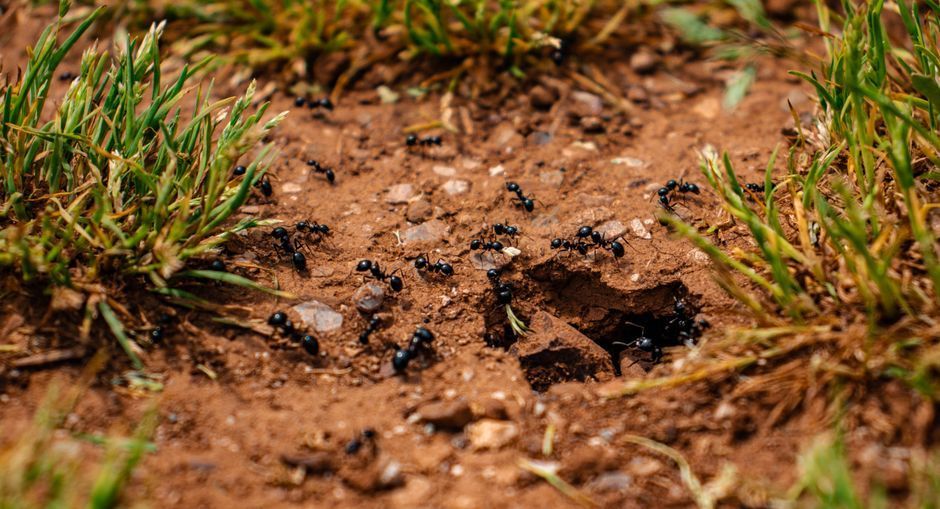
The ants crawling across your kitchen counter are workers. Their entire job is to forage for food, carry it back to the colony, and communicate the route to other workers through scent trails. When you spray those workers, you kill a few dozen ants. Maybe a hundred.
The colony? Untouched. Depending on the species, a single ant colony in Meridian can contain tens of thousands of workers. The queen is underground, producing hundreds of new eggs per day. Killing the foragers you can see has essentially no impact on the population below ground.
Within days, the colony sends out a new wave of foragers. They follow the same scent trails the dead ones left behind. And you're back to square one.
Why Sprays Can Actually Make It Worse
This part surprises most people.
Certain ant species, particularly odorous house ants, respond to chemical contact by a process called budding. When workers detect a chemical threat, the colony splits. The queen, or sometimes multiple queens, separates from the main colony and establishes satellite colonies nearby. One colony becomes two or three. You now have more ant problems distributed across a wider area.
Odorous house ants are one of the most common species in Meridian homes. They're the small dark ants that release a faint rotten coconut smell when crushed. They're also among the most likely to bud in response to surface sprays. So the can of Raid that seemed like the logical first step may have turned one nest near your foundation into three.
This is not a hypothetical. It's a documented behavior pattern that pest control professionals see constantly in homes where repeated DIY spraying preceded a professional call.
What Meridian's Growth Has to Do With Your Ant Problem
Meridian has been one of the fastest-growing cities in the country for the better part of a decade. All those new subdivisions in northwest Meridian, around Linder Road, Ten Mile, and further out toward Star and Middleton, sit on land that was agricultural or desert scrub not long ago. That soil was home to established ant colonies long before the first foundation was poured.
Construction disrupts those colonies. It doesn't eliminate them. The ants that survived underground during construction are now living directly below homes and driveways, and they're foraging into the nearest food source, which is your kitchen.
This is why new homeowners in Meridian are often confused about having ant problems from day one. The house is brand new. The kitchen has never had crumbs in it. And there are ants on the counter within the first week of moving in.
The ants aren't coming because of anything you did. They were already there.
The Three Ant Species Most Likely in Your Meridian Kitchen
Not all ants behave the same way, and knowing which one you're dealing with changes the approach.
Odorous house ants are the most common kitchen invader in Meridian homes. Small, dark brown to black, and fast-moving in trails. They're attracted to sweets and moisture. Surface sprays cause budding in this species, making them one of the worst candidates for DIY treatment.
Pavement ants are slightly larger, often darker, and typically enter through cracks in foundation concrete, expansion joints, or gaps around plumbing penetrations. They nest under slabs and pavement and forage into kitchens through ground-level entry points. They're less likely to bud than odorous house ants but still require colony-level treatment to eliminate.
Carpenter ants are the big ones, often black or black and red, and significantly larger than the other two. Finding them inside regularly, especially near windows, door frames, or in the bathroom, can indicate a moisture problem or decaying wood somewhere in the structure. Carpenter ants don't eat wood but they nest in it, and an active infestation inside the walls warrants professional inspection rather than surface sprays.
What Actually Works
The short answer is bait.
Ant bait works on a completely different principle than contact sprays. Worker ants are attracted to the bait, consume it or carry it back to the colony, and share it with other workers and the queen through normal colony feeding behavior. The active ingredient works slowly enough that the ant makes it back to the nest before dying. Colony-level elimination follows over days to weeks depending on the species and colony size.
This is why a professional treatment can solve in one visit what repeated DIY spraying hasn't fixed in months. The bait gets to the queen. The spray never did.
Professional residential pest control also addresses the exterior perimeter, which is where the actual ant pressure originates. A barrier treatment along the foundation, eaves, and entry points intercepts foragers before they reach the kitchen. Combined with targeted bait placement for active infestations, this approach addresses both the symptom and the source.
What You Can Do Right Now
A few things actually help while you're waiting for a professional treatment or between visits.
Eliminate moisture sources. Ants need water as much as they need food. A dripping pipe under the sink, condensation around the dishwasher, or a slow drain that stays wet is as attractive to ants as an open sugar bag. Fix moisture issues and you remove one of the primary draws.
Caulk and seal ground-level entry points. Check the gap where plumbing enters through the cabinet floor under the sink. Check the expansion joints where your countertop meets the wall. Small gaps around baseboards near exterior walls are common entry routes. These won't eliminate an established colony but they slow traffic considerably.
Move food into sealed containers. This doesn't make ants leave but it stops them from finding a reason to establish a regular trail to your kitchen specifically.
Stop spraying. Seriously. If you have odorous house ants and you've been hitting them with contact spray, stopping may help prevent further colony fragmentation before a professional treatment can address the actual colony.
Why the Problem Is Often Worse in Spring and After Rain
Meridian homeowners tend to notice ants most in two windows: early spring and after heavy rain or irrigation cycles.
In spring, soil temperature rises and dormant colonies become active again. The first warm weeks of March and April bring an explosion of foraging activity as colonies that spent winter underground start feeding and expanding.
After rain or irrigation, water infiltration can flood underground nest chambers and drive foragers to the surface and into homes. If your ant problem spikes after watering the lawn or after a rainstorm, the nest is likely close to the surface somewhere near your foundation, and the foragers are coming inside to escape the moisture.
This seasonal and weather-based pattern is one of the reasons a quarterly pest control service timed around these windows outperforms a single annual treatment. The spring visit addresses the first wave before it establishes trails into your home. The summer visit handles the peak season pressure. Fall treatments address ants seeking warmth and shelter before winter.
Frequently Asked Questions
Why do I have ants in a clean kitchen in Meridian?
Cleanliness helps but it doesn't eliminate ant pressure in most Meridian neighborhoods. The majority of homes in newer Meridian subdivisions sit on soils with established ant colonies that predate construction. Those colonies forage regardless of what's on your counter. A clean kitchen removes some attractants but it doesn't address the colony below ground or the entry points along your foundation. If you're seeing ants consistently despite keeping the kitchen clean, the issue is structural and requires exterior perimeter treatment, not better housekeeping.
I sprayed and the ants seem worse now. What happened?
Most likely budding. Odorous house ants, which are extremely common in Meridian homes, respond to chemical contact by fracturing into satellite colonies. One nest near your foundation can become two or three distributed across a wider perimeter. This is a well-documented response to contact insecticides in this species. The fix is to stop spraying and switch to a bait-based approach that allows the active ingredient to be carried back to the colony. A professional can identify the species and apply the right product to reverse the problem rather than accelerate it.
How long does it take to get rid of ants after a professional treatment?
For most ant species in Meridian, you should see a significant reduction in forager activity within 3 to 7 days of a professional treatment. Full colony elimination through bait can take 2 to 6 weeks depending on colony size and species. It's normal to see some ant activity during that window as bait continues to move through the colony. What you should not see is the same volume of trail activity you had before treatment. If activity hasn't decreased within a week, contact the company for a follow-up, which should be covered under any reasonable service guarantee. Bigfoot's service is backed by the Bigfoot guarantee, meaning if ants come back between visits, so does the team at no charge.
Are the ants in my Meridian kitchen dangerous to my family?
Most kitchen ants in Meridian are nuisance pests. Odorous house ants and pavement ants don't bite aggressively and pose no direct health threat. The indirect concern is food contamination. Ants forage through drains, trash, and soil before walking across your food prep surfaces. They can carry bacteria from those environments onto countertops and into food. For families with young children who eat off low surfaces or floors, consistent ant activity is worth addressing for this reason, not just for the annoyance factor.
Stop Spraying and Start Solving It
The can of spray is not the answer. It never was.
If you've been fighting ants in your Meridian kitchen for more than a week or two, the colony is established and surface treatment isn't going to get you there. Get a free estimate from Bigfoot Pest Control and let a licensed technician identify exactly what species you're dealing with, where the colony is, and what it takes to eliminate it rather than aggravate it.
Bigfoot has been serving Meridian homeowners since 2019. We know the neighborhoods, we know the soil, and we know which ant species are most active in each part of the city throughout the year.
Your kitchen should be yours. Not theirs.
Contact Today For $100 Off Your Initial Service!
⭐⭐⭐⭐⭐
Backed by our Bigfoot Guarantee!
What Customers Are Saying:
"Everyone from Bigfoot is awesome. They are always on time. They're extremely thorough. I've not had a single issue in the two years they have been treating our home. Well worth it!"
T. Potter | Meridian, ID